


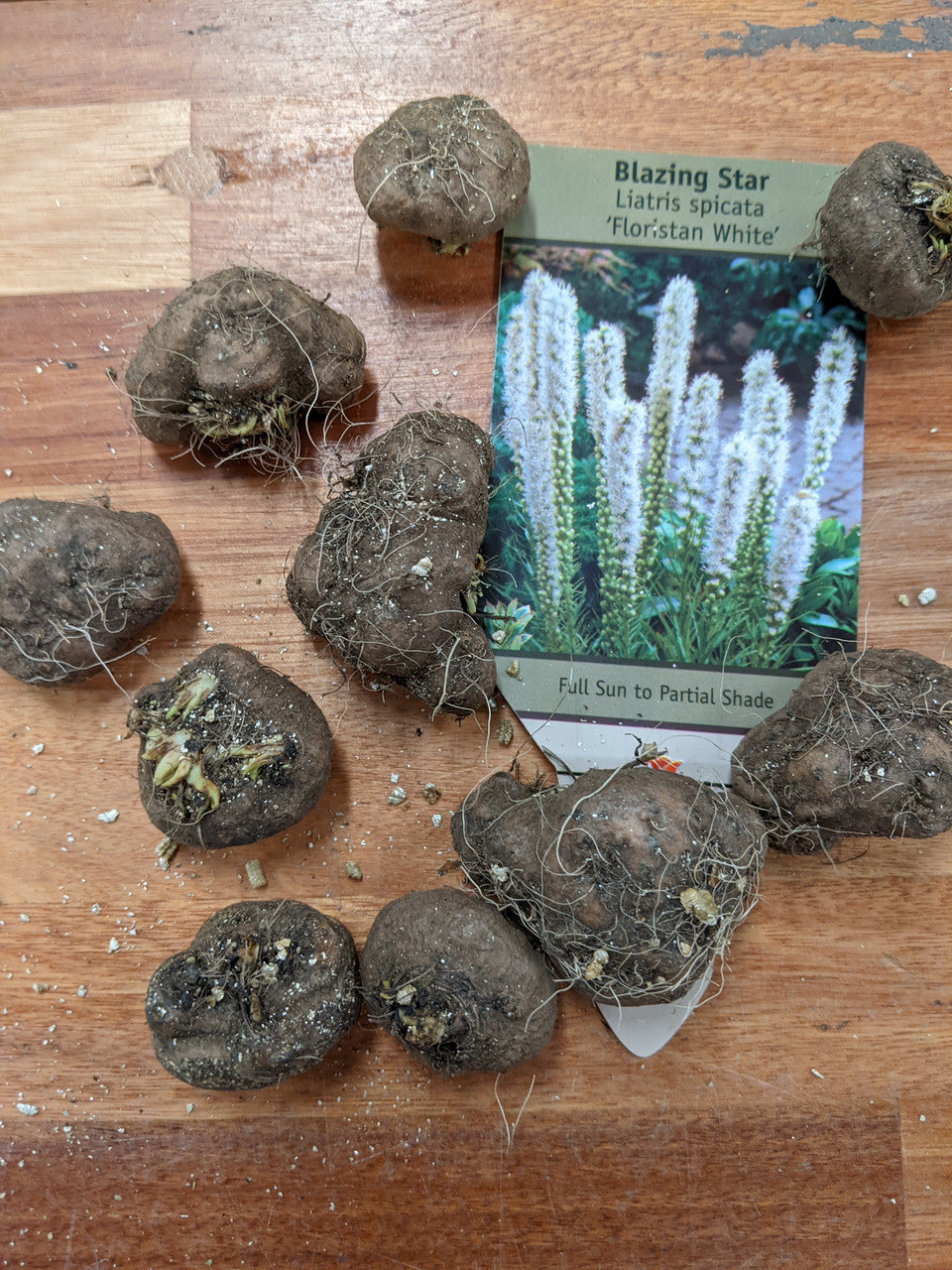
Liatris, often called blazing star or gayfeather, is a lovely perennial native to America, and 'Floristan White' is one of our favorite ways to bring a cool splash of white to the hottest part of a Southern summer. It is easy to care for, comes back year after year, and stands up to the heat with real fortitude. Many people use it as a cut flower in arrangements, as its tall spikes provide depth and a unique shape, and it is a magnet for pollinators, including butterflies and bees.
Blooms: Snowy white, bottlebrush-like flower spikes open from the top down in the heat of July or August. The plants stand 3-4 feet tall above clumps of grassy foliage. Hardy in zones 4-9.
Planting: Plant in a spot with full sun and well-drained soil; Liatris does not like ground that stays wet in winter. Dig a hole about two times the size of the bulb, mix in some fertile soil like potting soil, and put in the bulb so the top of the bulb is almost even with ground level. If it is hard to tell the top from the bottom, plant it on its side. Space bulbs about 12-18 inches apart. Water enough to give the bulb a nice drink at time of planting, and then water 1-2 times per week until the plant is established.
Landscaping Tip: Plant Liatris in groups toward the middle or back of a sunny border, or in a pollinator or cutting garden, where the tall white spikes can rise above lower summer bloomers.