


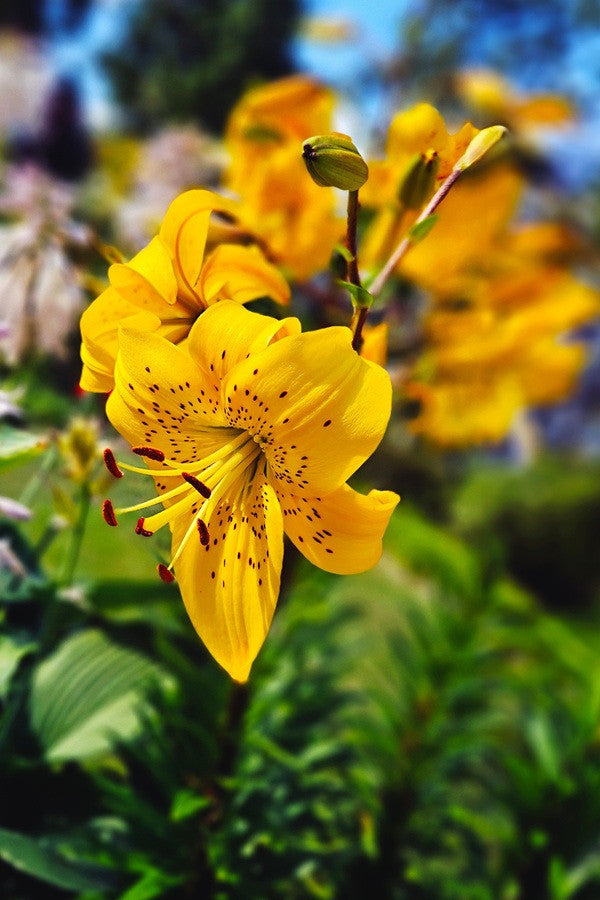
Discover the Charm of the Tiger Lily
The tiger lily (Lilium lancifolium), a beloved heirloom flower with origins in Asia, has found a home in gardens across the southern U.S. The Yellow Tiger lily is yellow (obviously) with spotted blooms which adds a touch of exotic beauty to any landscape. 
Planting and Care for Your Tiger Lilies
Tiger lilies prefer a woodland setting with acidic soil and afternoon shade during their summer blooming season
Planting Time: Plant as soon as you receive the bulbs. If delayed, store them in the refrigerator.
Planting Location: Choose a spot with about 8 hours of summer sun and well-drained soil. Don't plant during a hard freeze.
Planting Depth: Plant bulbs 2-3 times their height deep (e.g., a 2-inch bulb should be planted 4-5 inches deep).
Watering: Provide ample water as their foliage begins to appear in March and April.
Tiger Lily Multiplication: A Gardener's Delight
Once the blooms are coming to an end, knock off the bulbils and gently scratch them into the soil. With rich organic soil and some moisture, you'll have a stand of Tiger Lilies in just a few years
Attracting Pollinators and Enhancing Your Garden
Tiger lilies are a magnet for pollinators like hummingbirds, bees, and butterflies, adding life and movement to your garden. Combine them with companion plants for year-round interest:
Companion Plants: Salvias, Lantanas, Plumbago, Phlox, Alyssum, Snapdragons, Pansies, Cyclamen, Paperwhites, Narcissus, Iris, Snowflakes, Rain Lilies, Crinums, and Hymenocallis.
Tiger Lily Hardiness and Growing Zones
Tiger lilies thrive in USDA hardiness zones 3-9, making them suitable for a wide range of climates.