

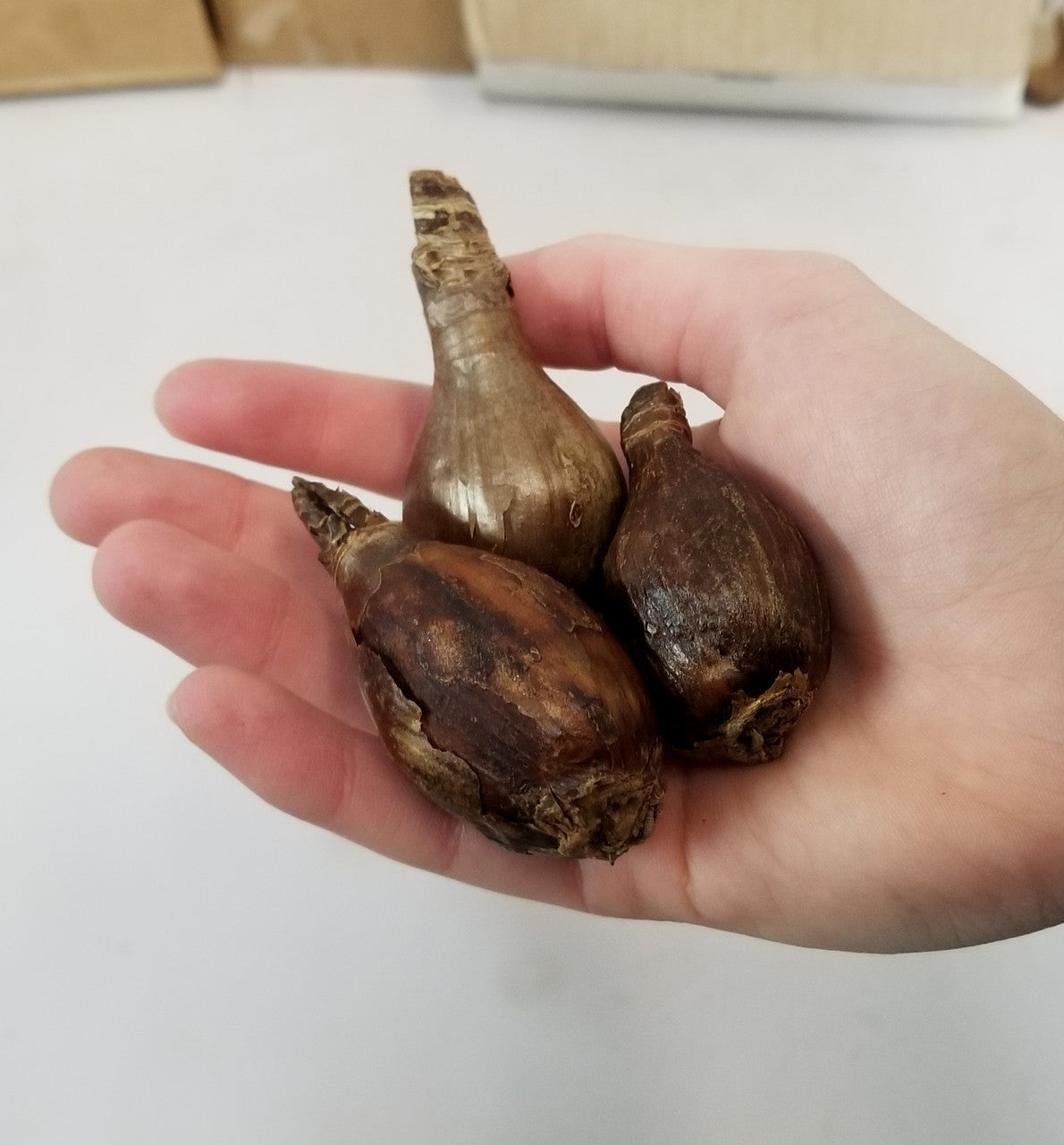
Lycoris sprengeri is one of the most charming members of the surprise lily family. Like its cousins the "Naked Lady" and the red spider lily, it pops up seemingly out of nowhere in late summer on a bare stem, bringing a flush of color just when most gardens are tired from the heat. We love it for its unusual coloring — rosy pink petals tipped with an electric blue — and for how dependably it comes back once it settles in. Plant it once, and it will be telling its story in your garden for years to come.
Blooms: Each bulb sends up a naked stem about 18 inches tall carrying a cluster of trumpet-shaped flowers. The blooms are pink with striking blue tips on the petals. They usually appear in late summer, around August and into September, often right after a good soaking rain. Hardy in roughly zones 6-10.
Planting: Plant in the fall in rich, well-drained soil. Set the bulbs so the top of the neck is even with or just below the soil surface — don't plant them too deep. Space them 4-6 inches apart, or plant them in small groups for a more natural look, since blooms on bare stems look best in clusters. Like other Lycoris, they grow their strap-like foliage in late winter and spring, so choose a spot that gets at least 6+ hours of sun while the leaves are up; full sun to light shade is ideal. Water well after planting, then keep the soil on the dry side during summer dormancy.
After Blooming: Always allow the foliage to die down naturally in late spring and don't cut it off, because the leaves are what feed the bulb for next year's flowers. Be patient: like most Lycoris, newly planted bulbs may take a year or two to settle in before they bloom.
Landscaping Tip: Plant them among low groundcovers, rain lilies, or spring-blooming bulbs so something fills the space while the Lycoris is dormant, and the late-summer stems have a soft backdrop to rise through.