


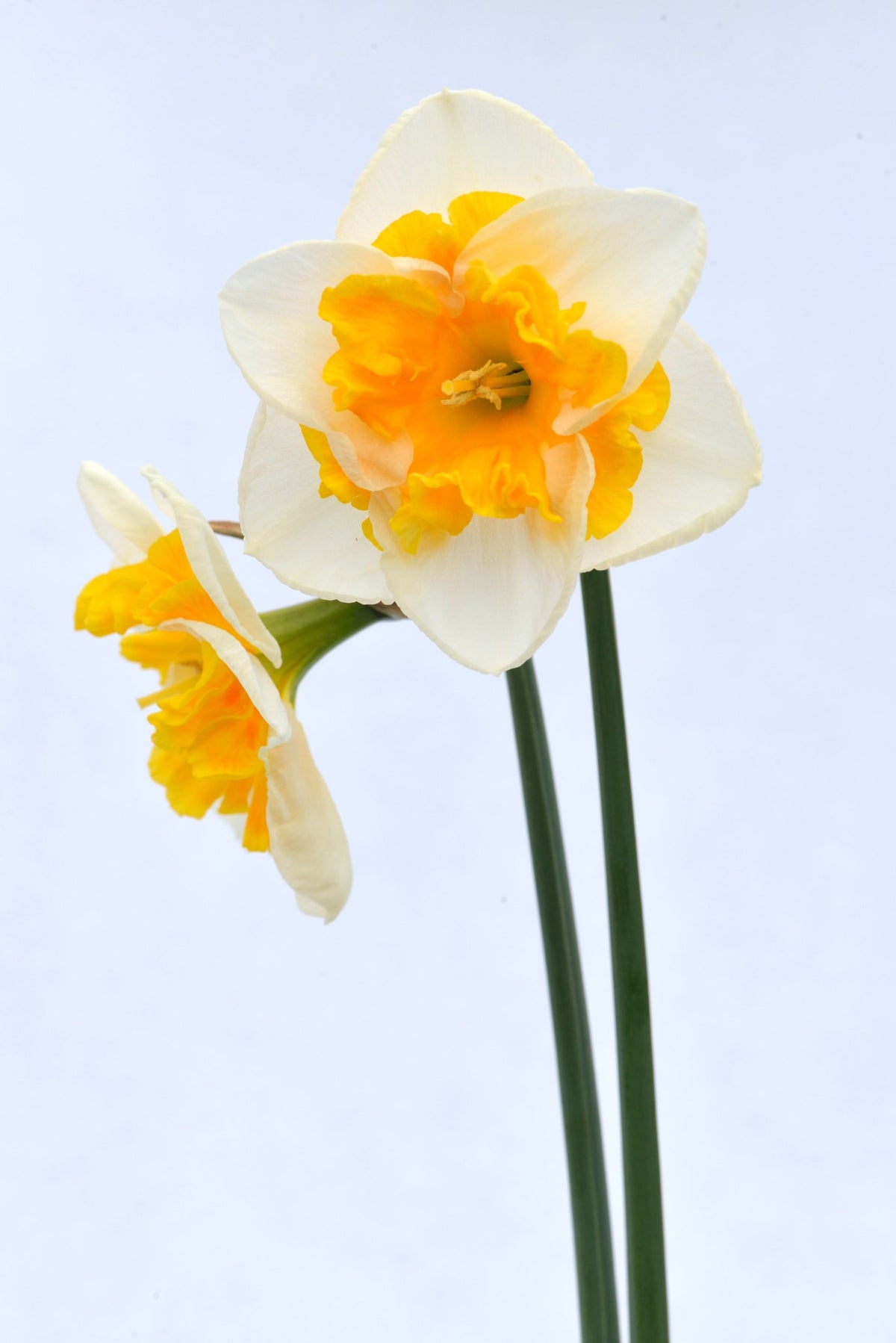
Bold and showy, Love Call is a split-cup “collar” daffodil with two overlapping layers of milky-white petals set off by a broad, ruffled, butterfly-like collar of golden orange. The contrast pops from across the garden. 16″ stems.

Blooms: The large flowers have a flat, ruffled golden-orange collar that lies open over the white petals like butterfly wings. It blooms mid-spring (April in zone 5) on 16" stems and is hardy in zones 4-8.
Plant: Plant the bulb like most daffodils in 6+ hours of winter sun, well-drained soil, avoid standing water, and avoiding too much competition. Plant the bulbs about 2-3 times the size of the bulb (so if the bulb is 1 inch long, plant it 2-3 inches deep). If you are farther north and get very cold during the winter, you may want to plant it about 4-6 inches deep. Space the holes about 3-6 inches apart, and for a more natural looking display, consider planting 2-3 bulbs in each hole.
Landscaping Tip: Narcissus bloom at different times so as one daffodil is ending its bloom time another is just beginning. We like to say that "there is a bulb that blooms every week of the year in warmer climates." Your garden can have consistent flowers that you can enjoy inside or outside for months and carry you all the way from February through April.
Animals: Like other daffodil bulbs, critters, including deer and gophers, leave this bulb alone. Bees and other early pollinators still find their way to the blooms.