


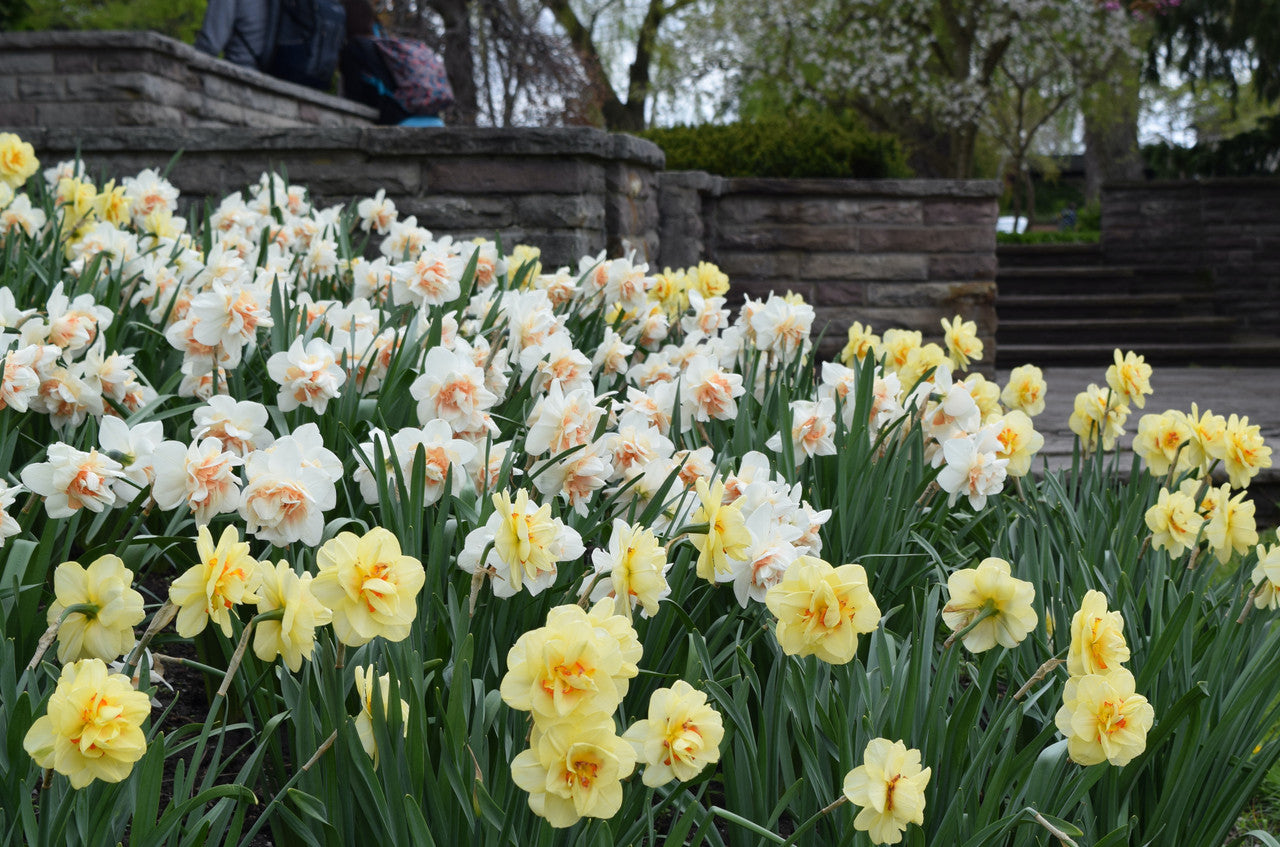
The Narcissus 'Tahiti' is a large bulb (14+ cm) that produces a lovely double yellow bloom! The multiple layers of yellow petals are only broken up by a hint of red peeking out of the very center. It is a showy, late-season daffodil that brings a big splash of color to the garden just as many other daffodils are finishing up.
Blooms: 'Tahiti' is one of the later daffodils to bloom, showing its amazing beauty from mid-spring into early May. The large, fully double blooms have layers of bright yellow petals with red-orange segments tucked in the center. The sturdy 14-16" stems make it a wonderful cut flower, and it is hardy in zones 3-8.
Planting: Plant the bulb like most daffodils in 6+ hours of winter sun, well-drained soil, avoid standing water, and avoid too much competition. Plant the bulbs about 2-3 times the height of the bulb deep (so if the bulb is 1 inch tall, plant it 2-3 inches deep). If you are farther north and get very cold during the winter, you may want to plant it about 4-6 inches deep. Space the holes about 3-6 inches apart, and for a more natural looking display, consider planting 2-3 bulbs in each hole.
Landscaping Tip: The Narcissus 'Tahiti' makes a great companion to the 'White Lion' and 'Yellow Cheerfulness' as they are all May bloomers. Plant them together for a late-spring show after your early daffodils are done.
After Blooming: Let the foliage stay in place until it turns yellow and dies back on its own. The leaves are feeding the bulb for next year's blooms, so resist the urge to cut or braid them early.